The Super Pultec, finished properly
The Massive Passive is what happened when Manley set out to build the equaliser a Pultec would have been if valve era engineers had had modern parts. It is not a parametric. There is no op-amp anywhere in the tone path - the filters are built entirely from metal-film resistors, film capacitors and hand-wound inductors, and a class-A all-valve make-up stage restores the level the passive network gives away. Everything you hear is the network and the tubes; nothing is corrected on the way out.
Four bands per channel, each switchable between bell and shelf, each with its own boost/cut, bandwidth and frequency selector, interleaved across 22 Hz to 27 kHz so the bands overlap deliberately. Bandwidth stays live in shelf mode, which is the detail most people miss: a Massive Passive shelf can be given a resonant lift at the corner or flattened into something almost Baxandall-gentle, and that single control is why its shelves sound unlike anyone else's.
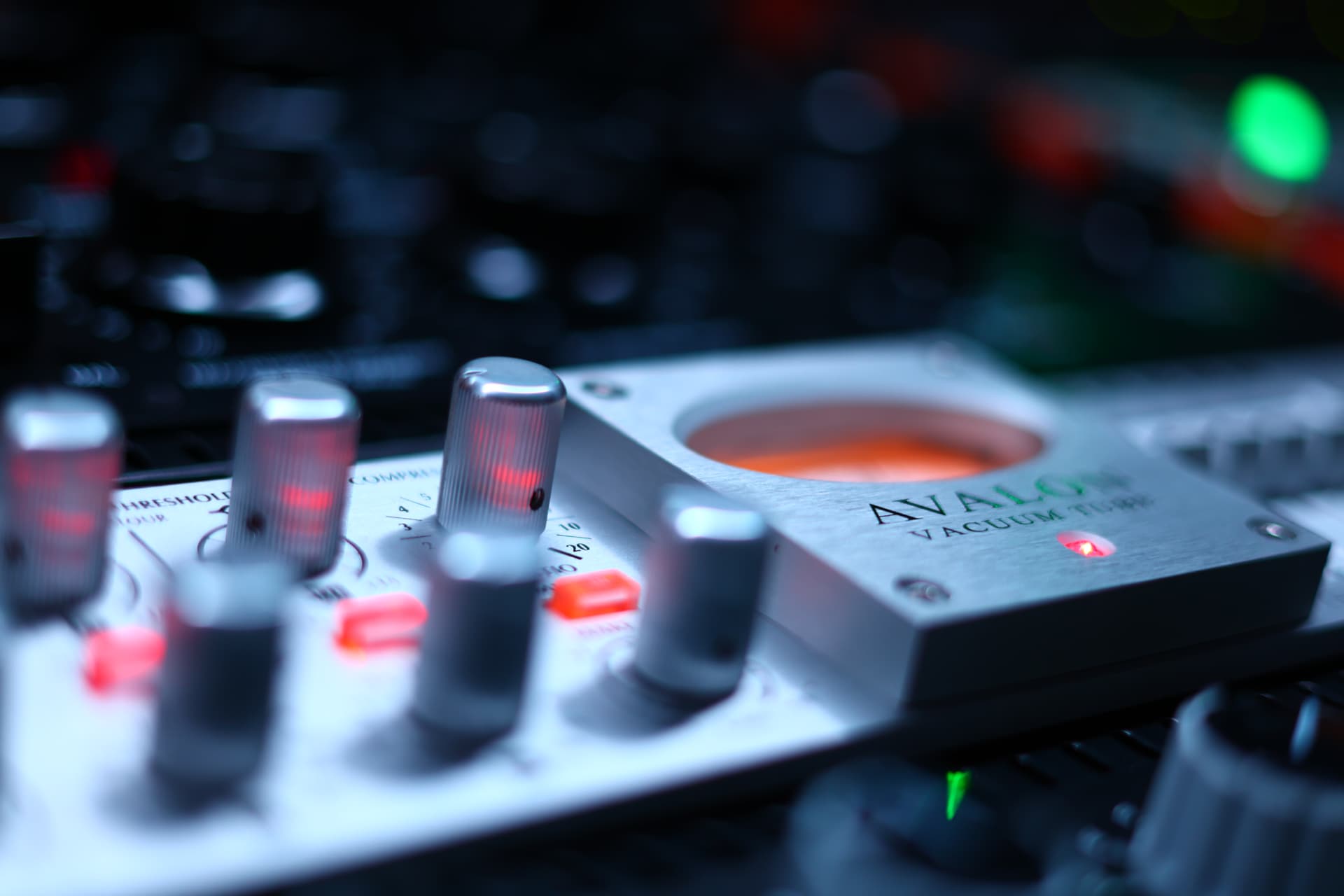
Passive, parallel, and why that matters
The four bands run in parallel rather than in series. On a conventional series EQ, two bands boosting the same region stack and you run out of headroom before you run out of ideas. Here they interact and partly cancel, so overlapping moves produce a composite curve instead of an arithmetic pile-up - you can be extravagant with the gain controls and the result still behaves. Gain and bandwidth interact on purpose too; Manley never pretended otherwise, and the manual says so in plain English.
Passive filtering also means the phase behaviour is the filter's own, not an amplifier's approximation of it. Broad boosts stay open rather than sibilant, cuts stay clean rather than smeared, and the mid bands - the reason most mastering rooms buy one - remove congestion without leaving a hole where the music used to be.
The mastering version
Ours is the mastering variant, and the differences are real rather than cosmetic. Gain and bandwidth controls are mechanically detented so every setting is loggable and repeatable across a session or a whole album, without the cost and panel-space penalty of Grayhill switches. The frequency selections are re-tailored for programme material: extended at both ends where mastering actually works, and thinned out where tracking-oriented choices would only get in the way. The high-pass and low-pass filters are likewise specified for mastering rather than for taming a single source. Recall matters more than convenience here - an equaliser that cannot be reset exactly is a liability on a multi-track project.
The 2020 build and Manley Power
This unit is the current generation build running Manley Power, the 300V regulated DC rail supply. It matters most where the EQ is asked to do the most work: low frequency boosts pull current, and a stiff regulated rail keeps the make-up stage's headroom from sagging while it happens. Manley quote 10 Hz to 70 kHz bandwidth, under 0.01% THD, 116 dB signal-to-noise and around +37 dBv maximum output. In practice that specification reads as the unit refusing to flinch - you can ask for a substantial low shelf on a dense mix and the top of the record does not narrow in sympathy.
Hardwire bypass on the XLRs takes the EQ, the tube stages and the input buffer out of circuit entirely, which is the only honest way to A/B an equaliser of this kind. Gain trim runs -6 dB to +4 dB, twenty decibels of boost or cut is available per band, and the nominal Q range of roughly 1.5 to 3 stays musical at every point of it.
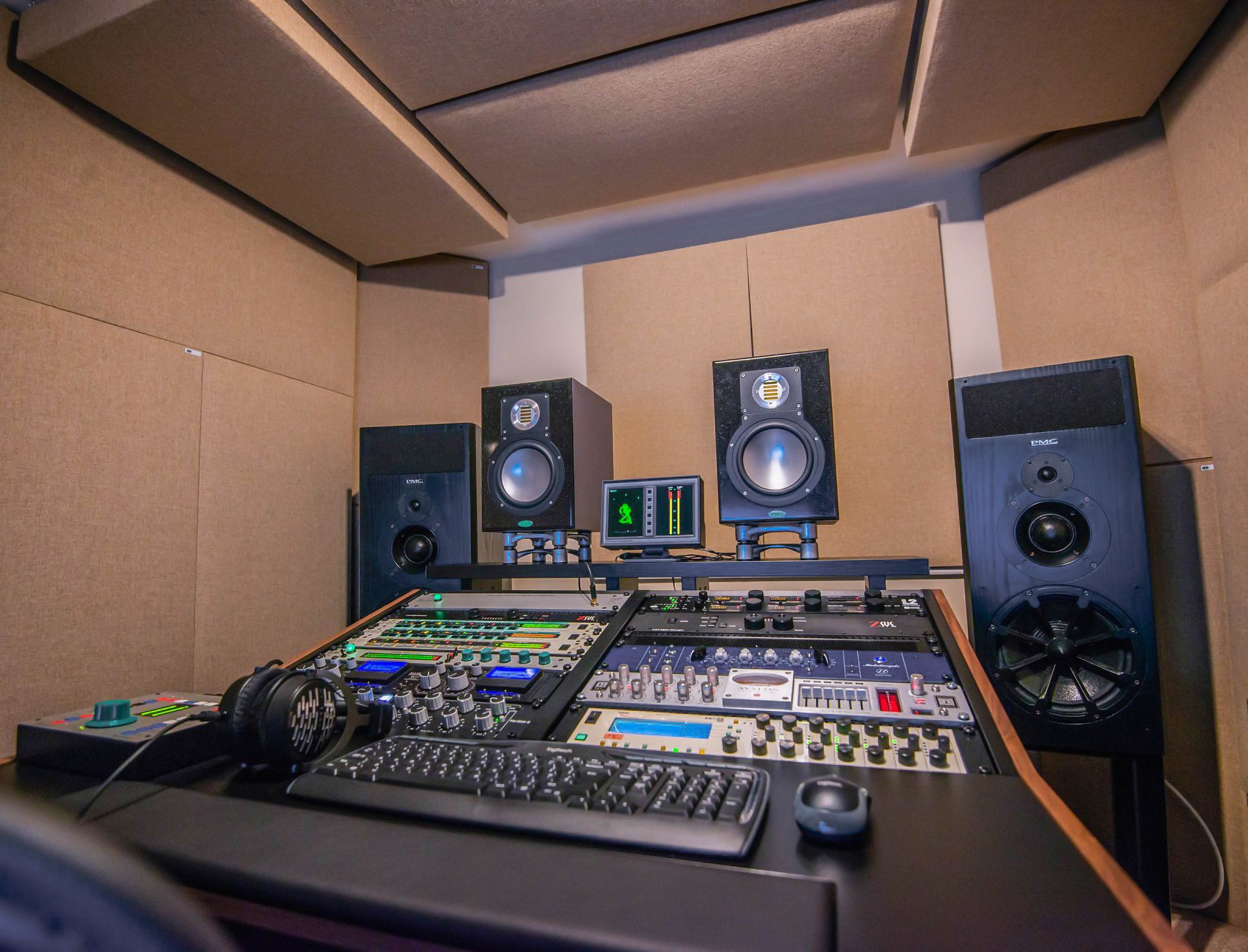
How we use it
We treat the Massive Passive as a tone instrument rather than a corrective tool. Its job is the character move - weight, air, the sense that a record was made somewhere expensive - and it earns that keep on stereo programme and on stem work alike. Where exactly it sits in a given chain depends entirely on the record in front of us; the point of owning the unit is that it can go almost anywhere in the analogue path and still sound like it belongs there. What we will say is that its shelves and its mid bands are the two things no plugin has convincingly replaced in this room, and that we reach for it far more often for what it adds than for what it removes.
Hardware info
The mastering version currently lists around $8,399 new - appreciably above the standard model - and hand built Manley units of this class hold their value like vintage instruments rather than depreciating like studio equipment. Every one is assembled, tested and tuned by hand in Chino, California, and has been for over three decades.
Hear it on your record
Book a master
This chain is available on every stereo and stem master we deliver from Manchester.