Mastering Guide
Analog vs Digital Mastering - What Actually Matters
A studio perspective on analog and digital mastering - what each does well, where hybrid chains win, and how to choose the right approach for your record.
Analog vs digital is one of the most argued about, least productive debates in audio. In practice, every serious mastering studio in 2026 uses both. The real question isn't which is better - it's what each format is genuinely good at, and how to combine them so your record sounds like itself, only better.
Here's how we think about it at Dimension Mastering.
What analog gear actually does
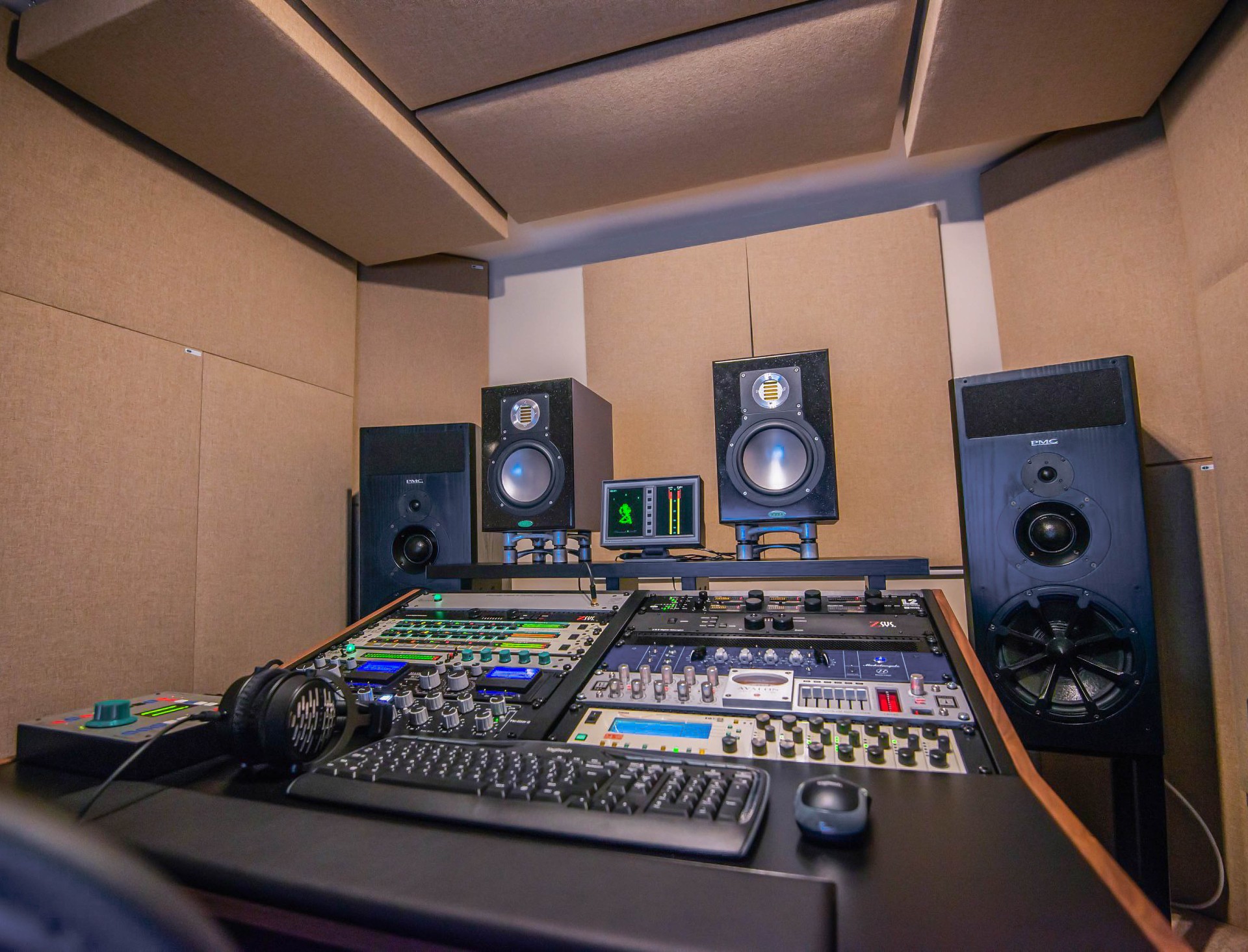
Analog processors - transformers, tubes, class-A discrete circuits, tape - impose a physical signature on audio. That signature includes:
- Harmonic saturation - even and odd order harmonics that our ears read as warmth, weight, and density.
- Transient rounding - subtle softening of sharp peaks, which lets the master feel louder before it feels squashed.
- Frequency dependent behaviour - analog EQs have phase and resonance characteristics you can't perfectly model.
- Program-dependent compression - the way a good analog compressor responds to loud low end vs quiet vocals is character, not accuracy.
None of that is inherently "better." It's a colour. When the record wants that colour, analog is the fastest way to it.
What digital does better
Digital isn't the poor cousin - it's genuinely superior for a lot of the work.
- Surgical EQ - pinpoint corrective cuts with linear-phase precision.
- Look-ahead limiting - every serious loudness stage on a modern master is digital.
- Recall and revision - total recall of settings, revisions without moving a knob.
- Mid/side processing - cleaner and more flexible in the box.
- De-essing, dynamic EQ, multiband - mostly better in the digital domain.
- Zero noise floor - no hiss, no hum, no ground loops.
If you need to remove a resonance at 4.2 kHz on the vocal without touching anything else, that's a digital move.
The hybrid chain - best of both
Almost every master we cut runs through a hybrid chain. Signal typically flows:
- Digital pre-processing - corrective EQ, dynamic EQ, de-essing on the source.
- Out to analog - via a high end converter, into a chain of outboard EQ, compression, and often a stereo bus processor.
- Back to digital - through another converter for final limiting, dither, and delivery.
The analog stage gives the record its weight and glue. The digital stages give it precision and loudness. Neither format is doing what the other does badly - they're each doing what they do best.
When analog matters most
- Rock, indie, soul, jazz, hip-hop with a live feel - records that want density, warmth, and a sense of "one thing" happening.
- Records that already sound close - analog adds finishing character without changing the balance.
- Mixes with lots of transients - tape and opto compression round them beautifully.
- Anything destined for vinyl - the format itself is analog; matching the mastering chain feels natural.
When digital first is smarter
- Electronic music with surgical bass demands - precise sub control matters more than colour.
- Corrective mastering - fixing a problem cleanly and getting out of the way.
- Budget projects on tight deadlines - digital sessions recall instantly.
- Loudness-critical genres - the final limiter is always digital anyway.
The myths worth ignoring
- "Analog is always warmer." A cold, sterile analog chain exists. A gorgeous, warm digital chain exists. Warmth is a design choice, not a format.
- "Digital is transparent." No processor is transparent - every EQ curve, every compressor threshold changes the sound. "Transparent" usually means "I don't hear anything I dislike."
- "You can hear the difference on any system." Some analog moves are audible on earbuds. Some are only audible on a full-range monitoring chain in a treated room. Don't pretend otherwise.
- "Plugins have caught up." Some have - many haven't. The best modelled compressors are excellent. The best modelled tape is still not quite the real thing at the finest level.
How we choose for your record
We start by listening to your mix against your references and asking two questions:
- What does this record need that it doesn't have yet? Weight? Air? Glue? Loudness? Space?
- What's the fastest, most transparent way to get it there?
Sometimes that's a full analog pass through the rack. Sometimes it's a mostly-digital chain with one analog stage for glue. Sometimes it's a purely in-the-box master because the mix is already sitting exactly where it needs to be.
The format is a tool. The record is the point.
Quick reference - which chain for which record
| Record type | Likely chain |
|---|---|
| Rock / indie / soul | Hybrid, analog heavy |
| Acoustic / jazz | Hybrid, minimal processing |
| Hip-hop | Hybrid, analog glue + digital sub control |
| Electronic / techno | Digital first with one analog colour stage |
| Pop | Hybrid, precise digital + analog warmth |
| Anything for vinyl | Hybrid, analog leaning |
Ready when you are
Send us your stems
Prepared your files with this guide? Get in touch and we'll take it from here.